Chatform: Designing an AI-Powered Help Desk MVP.
Company
Chatform (USA-based startup)
Role
Lead Product Designer
Team
1 Product Manager
2 Engineers
1 UX Researcher
1 Visual Designer
Duration
6 months (MVP phase)
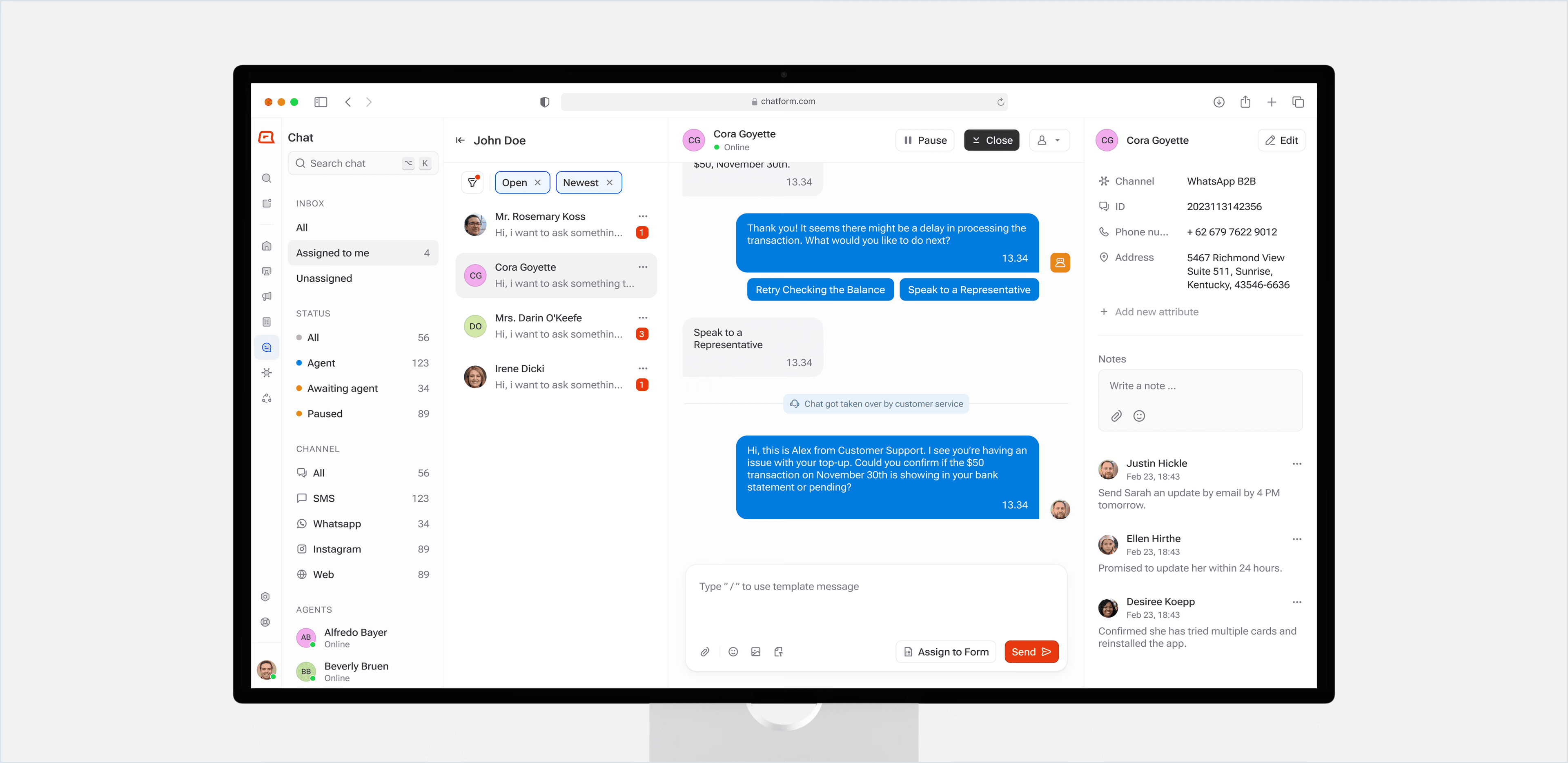
#Overview.
Chatform is an AI-driven customer support platform designed to streamline support operations through automation, a flexible workflow/bot builder, and omnichannel communication. I was brought in to lead the design of their MVP—from discovery to delivery—ensuring the product was usable, scalable, and strategically aligned with the business goals.
#The challenge.
#Problem.
- Abstract concepts. The client had a strong vision but limited technical references. The first hurdle was translating abstract ideas into a concrete product roadmap.
- No precedent. No existing interface or framework—we were building from scratch.
- Complex use cases. We had to accommodate both non-technical support agents and admins with advanced automation needs.
- Time-boxed. We had just 12 weeks to design and validate the MVP.
#Project Goal.
- Launch a fully functional MVP to validate product-market fit.
- Design an intuitive interface for both support agents and admins.
- Build a flexible chatbot & workflow builder that enables automation without code.
- Create a scalable design system to support future features.
North star: Reduce operational overhead for support teams while improving response times.
#My role.
As Lead Product Designer, I owned the design direction from discovery through delivery:
- Ran discovery sessions and stakeholder interviews.
- Defined IA, user flows, and core product architecture.
- Led UX research and competitive analysis.
- Produced wireframes, hi-fi UI, and interactive prototypes.
- Collaborated closely with engineering for smooth handoff and implementation.
- Partnered with visual design to ensure brand consistency across UI, icons, and marketing.
#Project management & organization.
We followed an agile cadence with weekly check-ins and design sprints.
- Kickoff workshop. Aligned on goals, user segments, and the competitive landscape.
- Prioritization matrix. Clarified MVP must-haves vs. nice-to-haves.
- Design reviews. Weekly syncs with PM/engineering to test assumptions and de-risk delivery.
- Prototyping → dev handoff. Figma components, variants, and prototypes, plus Loom walkthroughs for QA and build.
#My Work as a UX Designer
#Dashboard (Home)
- Problem. New agents needed orientation; experienced agents needed fast access to common actions.
- Process. Researched onboarding and dashboards (Intercom, Zendesk, Freshdesk).
- Solution. A home view with shortcuts to core features, knowledge base access, and real-time chat updates.
- Outcome. Reduced time-to-first-response for new agents; helped teams stay proactive.
- Value delivered. Clear first-touch experience aligned to agent mental models.

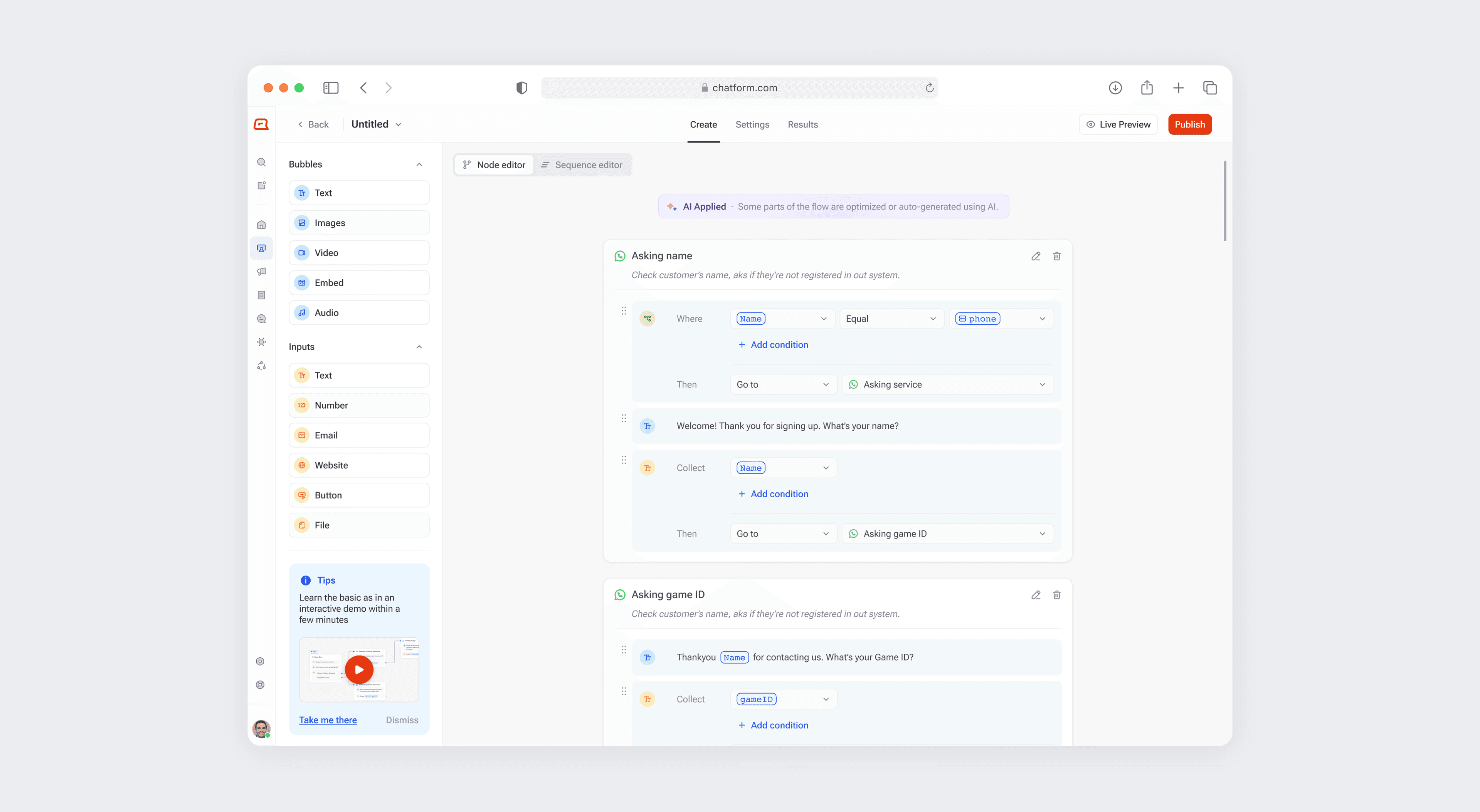
#Bot Builder & Templates
- Problem. Teams needed to automate workflows without coding.
- Process. Mapped common scenarios (support, feedback, onboarding).
- Solution. Drag-and-drop builder with pre-built templates and full customization.
- Outcome. Bots deployable in minutes; easy to extend.
- Value delivered. Lower dependency on devs; faster automation cycles.


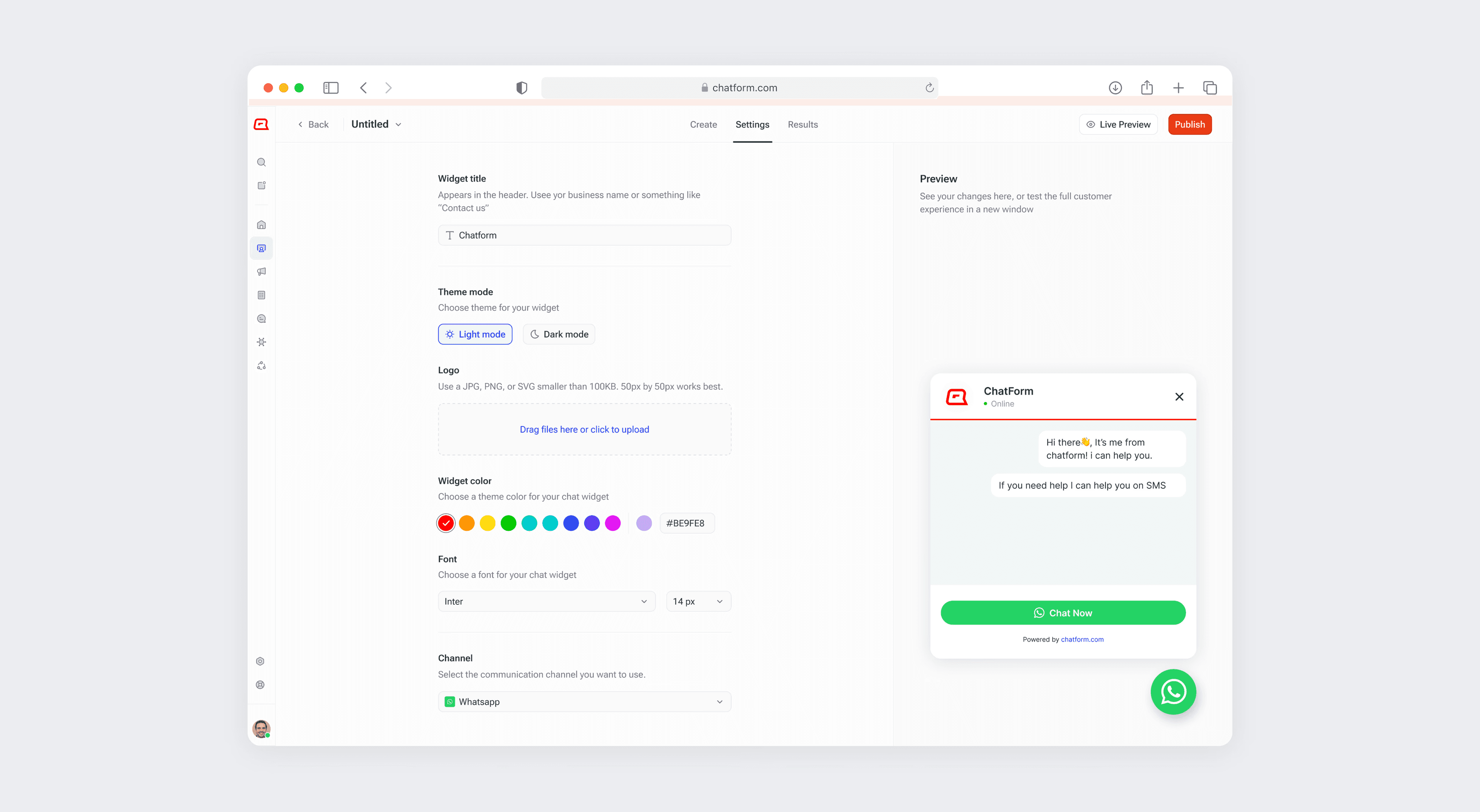
#Widget Settings (Customization)
- Problem. Clients needed the support widget to reflect their brand.
- Process. Designed real-time customization with live preview and theme presets.
- Solution. Controls for colors, fonts, avatar styles, tone of voice.
- Outcome. Fully white-labeled experiences.
- Value delivered. Increased trust and brand alignment.
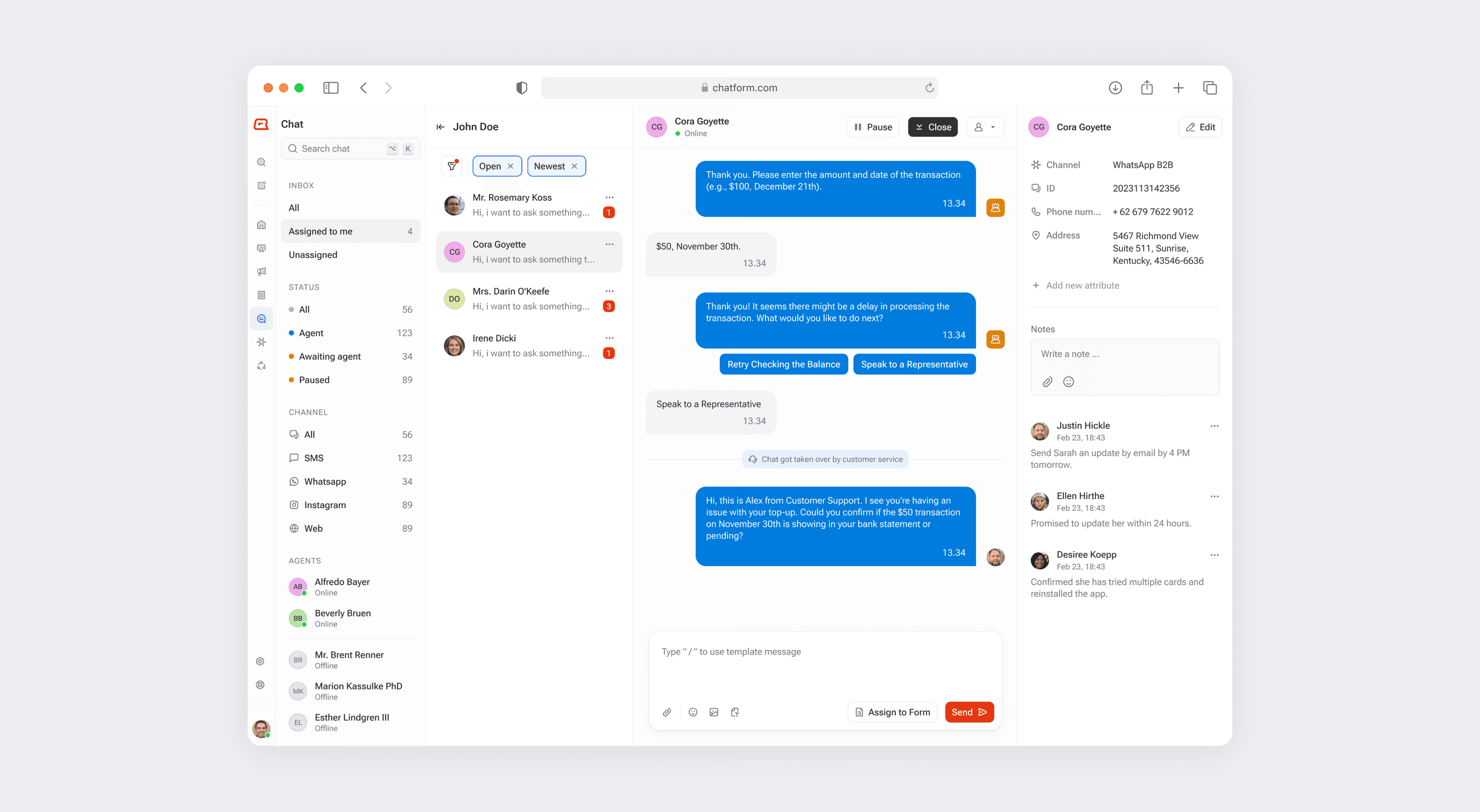
#Chat Inbox
- Problem. Agents juggled high volumes across channels with fragmented tools.
- Process. Interviews to uncover workflows, pain points, and shortcuts.
- Solution. Unified inbox with filters, real-time attributes, quick replies, and internal notes.
- Outcome. Centralized, actionable workspace.
- Value delivered. Faster responses and reduced handling time.
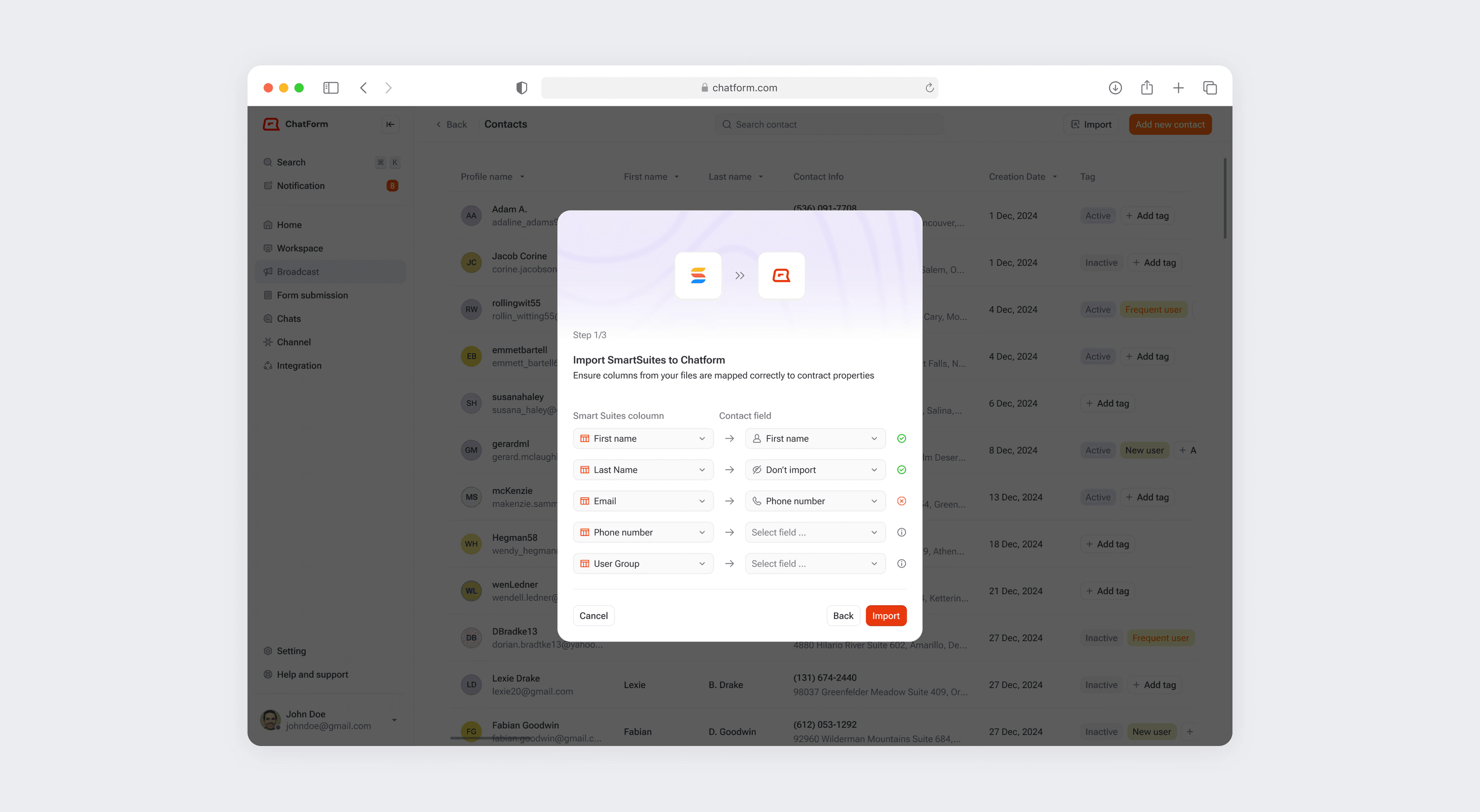
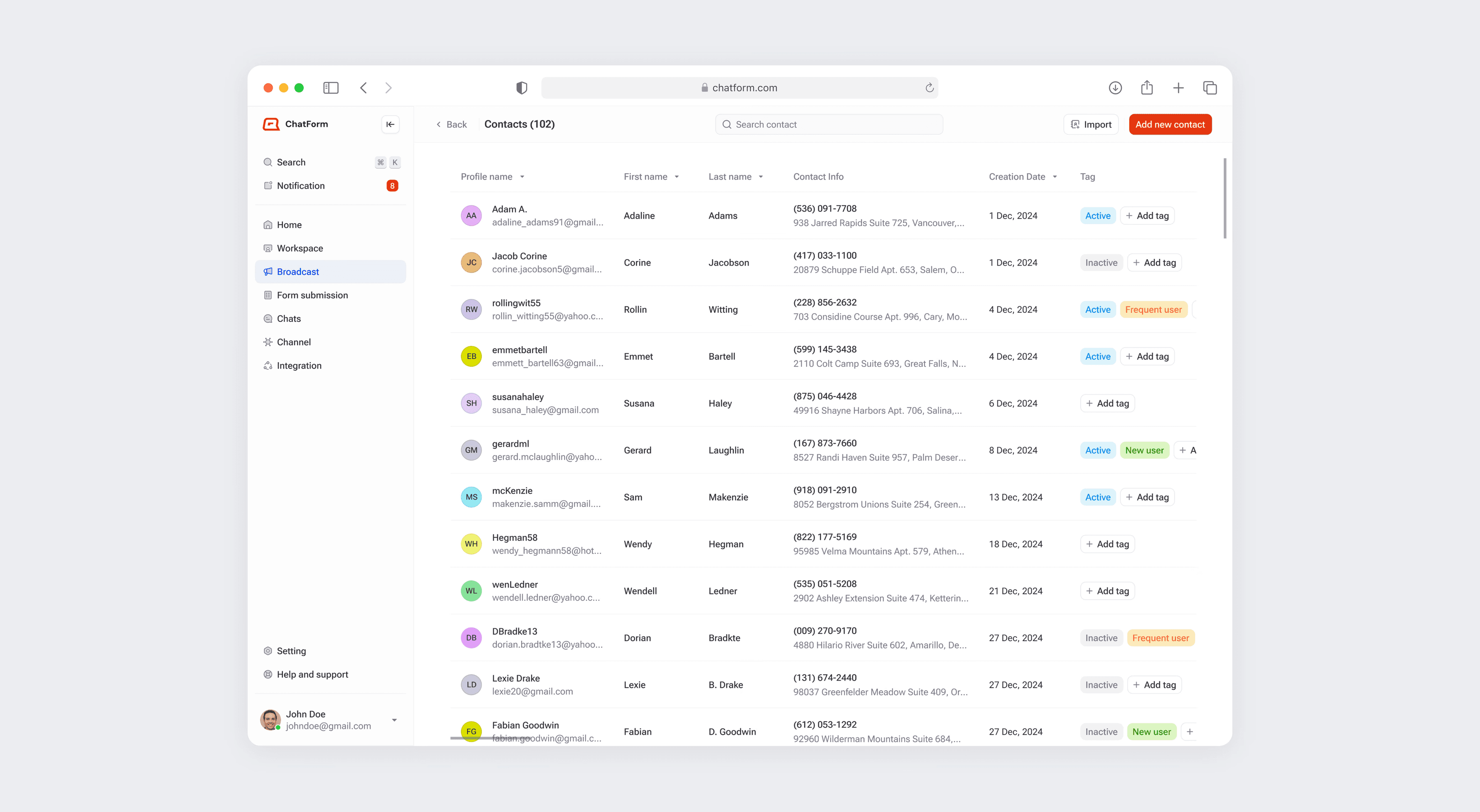
#Contact Importer
- Problem. New customers often migrated from other tools and needed clean data.
- Process. Researched imports in HubSpot, Intercom, Airtable.
- Solution. CSV uploader with field mapping, exclusion toggles, and custom property creation.
- Outcome. Lower onboarding friction.
- Value delivered. Faster setup for new accounts.
#Collaboration & Handoff.
I collaborated closely across functions to keep feasibility and pace:
- Engineering. Weekly syncs and async reviews to ensure technical fit and pixel accuracy.
- Product. Translated business goals into shippable slices and milestones.
- QA. Documented behaviors, states, and edge cases; supported live QA during implementation.
- Stakeholders. Regular demos to validate progress and refine priorities.
Handoff package: Structured Figma library, page-level specs, motion/behavior notes, and Loom walkthroughs.
#The Final Product.
The MVP shipped in 12 weeks with:
- Customizable chat widget
- Scalable drag-and-drop bot builder
- Multi-channel inbox
- Robust onboarding tools (knowledge base, imports)
- Admin dashboard with user-friendly controls
Everything was built with modular components for future growth—no fluff, just utility.
#Results & Impact.
- Time to value. Bots deployable in 15 minutes.
- Efficiency. First-response time reduced by ~30% using quick replies and smart filters.
- Adoption. Positive pilot feedback, especially on the builder’s clarity and speed.
- Scalability. Componentized system ready for rapid feature iteration.
#Reflection & Lessons Learned.
#What worked
- Early, frequent alignment minimized scope creep.
- Templates delivered value before deeper learning was required.
- Weekly feedback loops exposed friction before dev handoff.
#What I’d do differently
- Invest even earlier in usability testing for complex tools (e.g., the builder).
- Add a guided onboarding sequence to accelerate first-time success.
- Define analytics upfront to measure MVP success immediately post-launch.